

The refinery
Full conversion, maximum middle distillates
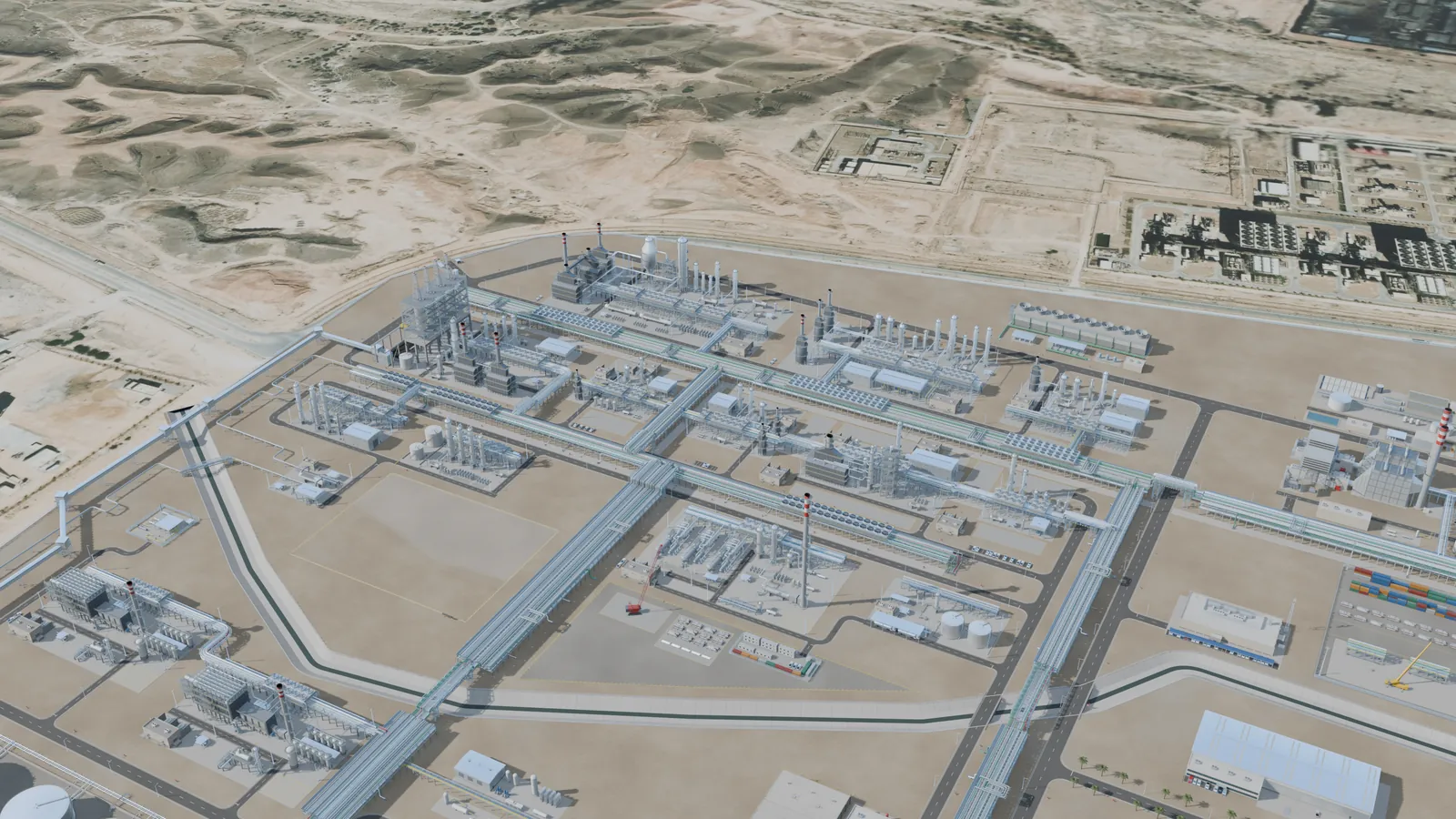
One 150,000 bpsd crude and vacuum train feeds a two-stage hydrocracker, a delayed coker, three hydrotreaters and a gasoline block. The residue is converted, so the refinery makes no fuel oil.
Configuration
A proven recipe for medium-sour Gulf crude
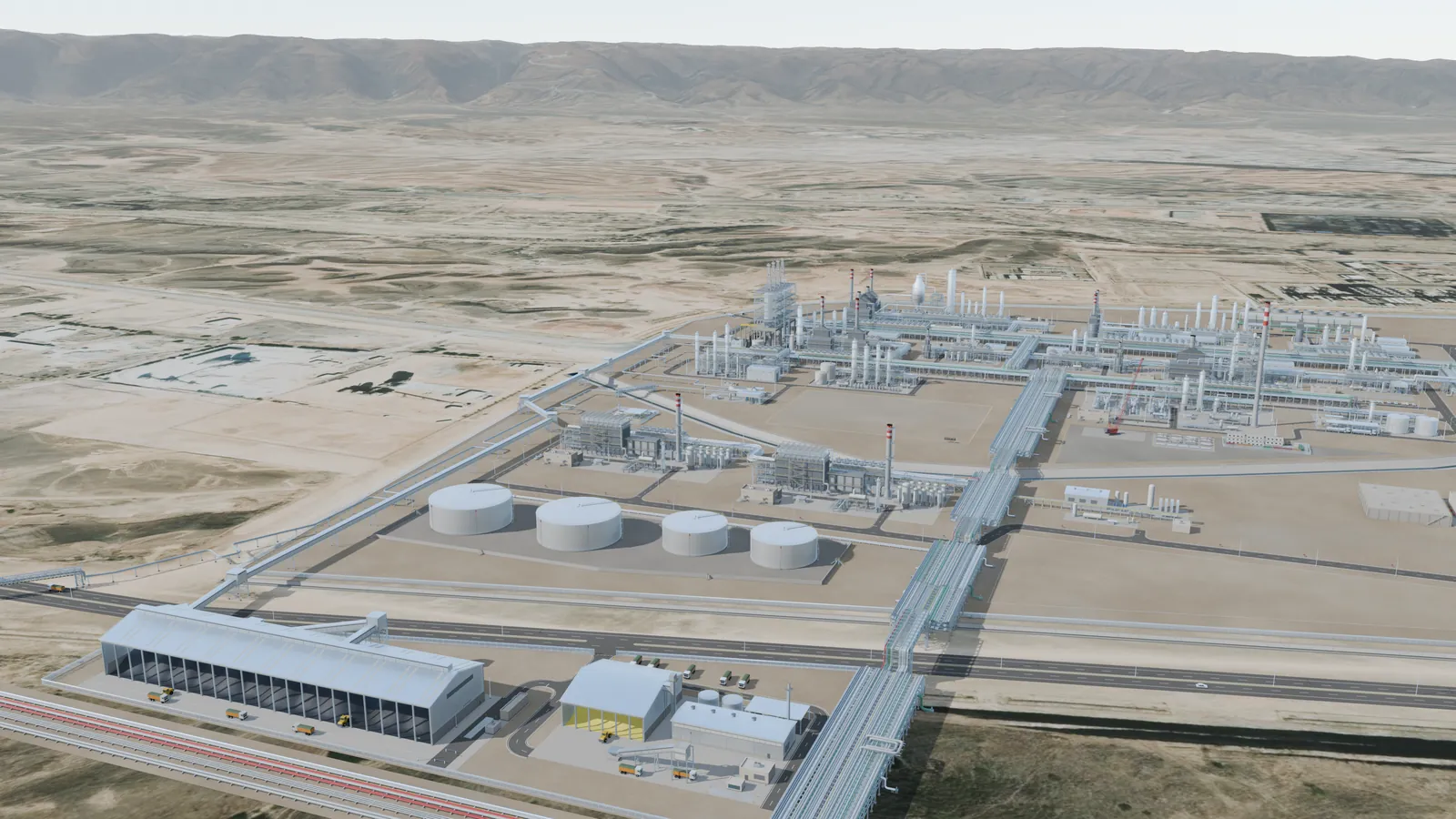
The configuration combines distillation, hydrocracking, delayed coking, hydrotreating, hydrogen production and sulphur recovery: the established route to maximise Euro 5 diesel and jet fuel from this crude family.
Units are sized for an Oman-anchored crude diet of about 33.5 °API and 1.5 wt% sulphur, with flexibility from 30 to 40 °API at full rate; a heavier Gulf diet runs at reduced rate. The design targets a Nelson complexity index of about 9.5.
Four hot intermediate tanks on the parcel let the train ride through a hydrocracker or coker outage, and major turnarounds follow a four-year cycle.
Process units
Unit list and planning capacities
Products
What the refinery makes
Saleable liquids are about 94.4% of the crude volume, and diesel and jet fuel make up about two thirds of the output.
Planning yields for the design crude, to be confirmed by the licensor and LP study. The hydrocracker can swing about 5% of output by weight between jet fuel and diesel.
Specifications
Products to the specifications buyers name
- 01
Diesel
A single 10 ppm sulphur, EN 590-type grade that meets Euro 5 markets and over-complies where 50 ppm or more is allowed.
- 02
Jet fuel
Jet A-1 to international specification, with batch certification and segregated handling.
- 03
Gasoline
A 92 RON pool with 95 RON capability, benzene at or below 1% by volume and 10 ppm sulphur.
- 04
Naphtha
Full-range naphtha for export to petrochemical crackers.
- 05
LPG
Propane and butane, kept segregated, for regional import terminals.
- 06
Coke and sulphur
Fuel-grade petroleum coke and formed sulphur in covered storage, exported in bulk.
Inside the process core
Built around the main pipe racks
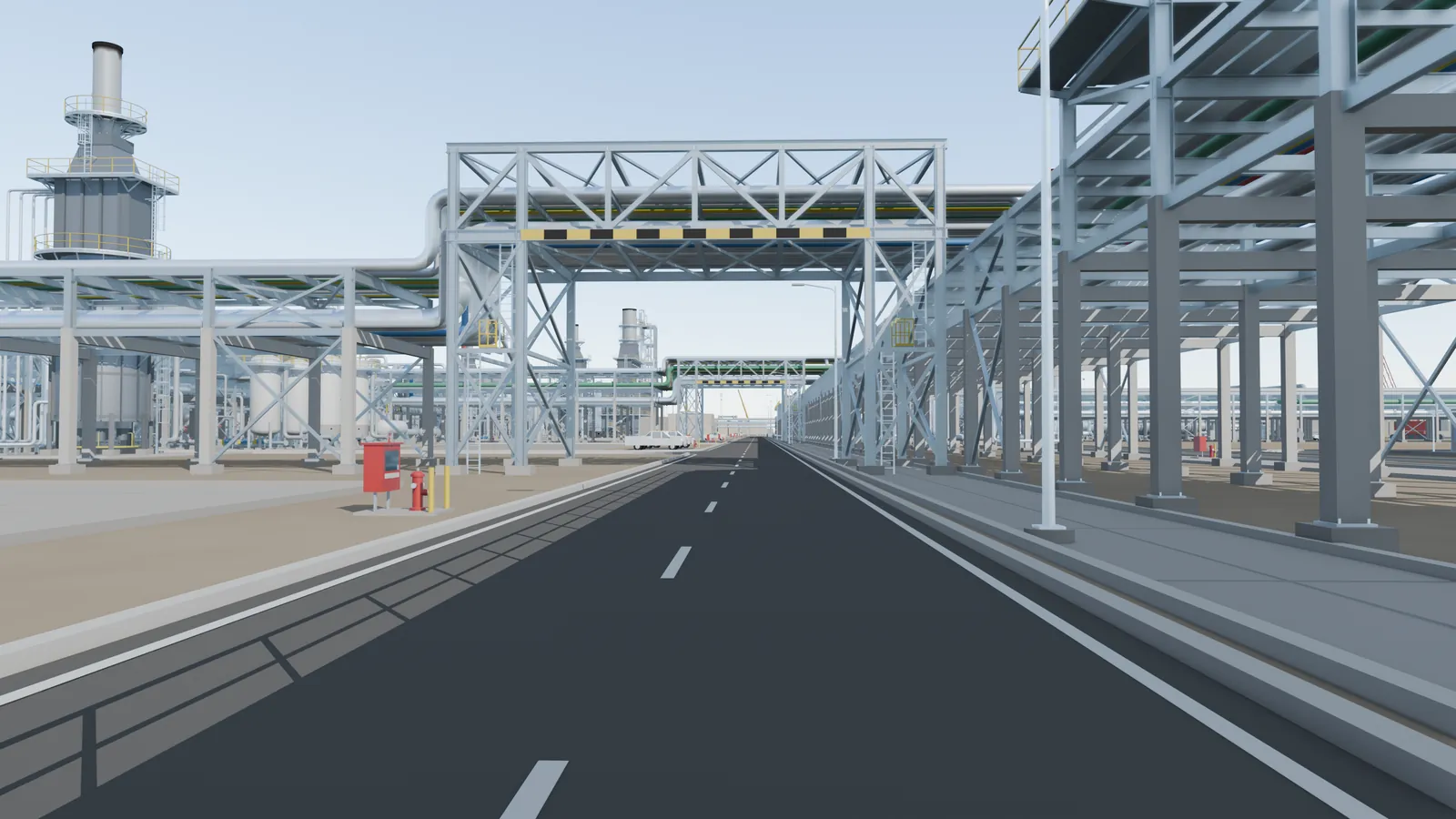
A street-level view along a plant road: the main rack with air coolers, heaters and drums, and pipe bridges over the road.
Utilities
Self-supplied power, steam, hydrogen and water
- 01
Cogeneration
Two 60 MW-class gas turbines with heat-recovery steam generators and a steam turbine, about 165 MW gross, supply the plant’s average load of about 115 MW and 125 t/h of process steam.
- 02
Grid connection
Two 132 kV circuits to the free-zone grid station provide standby supply; a non-firm surplus of about 25 MW can be offered to the grid.
- 03
Hydrogen
Two 80 MMscfd steam methane reformers supply the hydrocracker and hydrotreaters; one can hold about 65% of rate if the other trips.
- 04
Sulphur recovery
Three 130 t/d Claus trains with tail-gas treatment recover about 246 t/d of sulphur at full rate, with a spare train at the design crude.
- 05
Water
A 25,000 m³/d seawater reverse-osmosis plant supplies all process and domestic water; the refinery draws no groundwater.
- 06
Natural gas
About 2.45 million m³ a day at phase 1, for hydrogen production and cogeneration, to be competed for under the national gas allocation process.