

Sustainability
Designed to international lender standards from the start
The project screens as Category A under the Equator Principles. One integrated environmental and social impact assessment, written to IFC Performance Standards, will support Oman’s Class A permits and the lenders’ review.
Approach
How the project is being assessed
- 01
One integrated ESIA
A desktop scoping study was completed in October 2026. The full assessment starts in 2027 with two baseline seasons, one of them the Khareef, and takes 12–18 months from scoping to approval.
- 02
Air quality
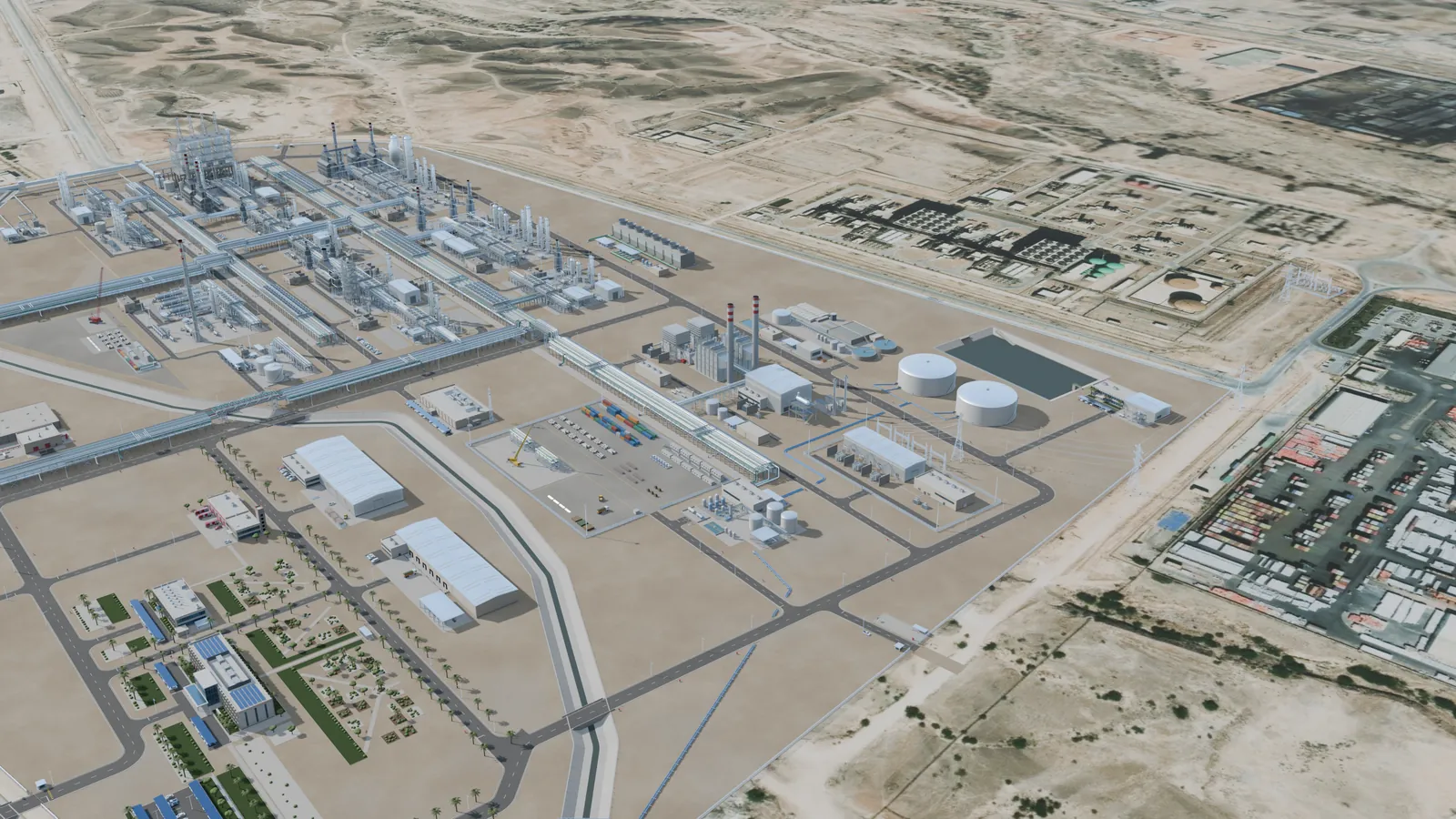
Dispersion modelling of the refinery together with its industrial neighbours, because the prevailing southerly winds carry emissions north over the free zone and Raysut.
- 03
Marine environment
Surveys of the mooring site and tanker approaches, including for the endangered Arabian Sea humpback whale, and an oil-spill preparedness plan.
- 04
Engagement
Consultation and disclosure with the Raysut communities, fishers, industrial neighbours and the tourism sector, and a grievance mechanism from the start of development.
- 05
Permits
Environment Authority Class A permits for the refinery, storage, mooring and export lines are a condition precedent to the final investment decision.
- 06
Management system
An environmental and social management system, with management plans for construction and operation, contractor standards and monitoring commitments.
Design
Cleaner fuels and controlled emissions
Safety and emissions shape the layout as much as the process design.
- 10 ppm sulphur diesel and gasoline, and no fuel oil
- Three sulphur recovery trains with tail-gas treatment
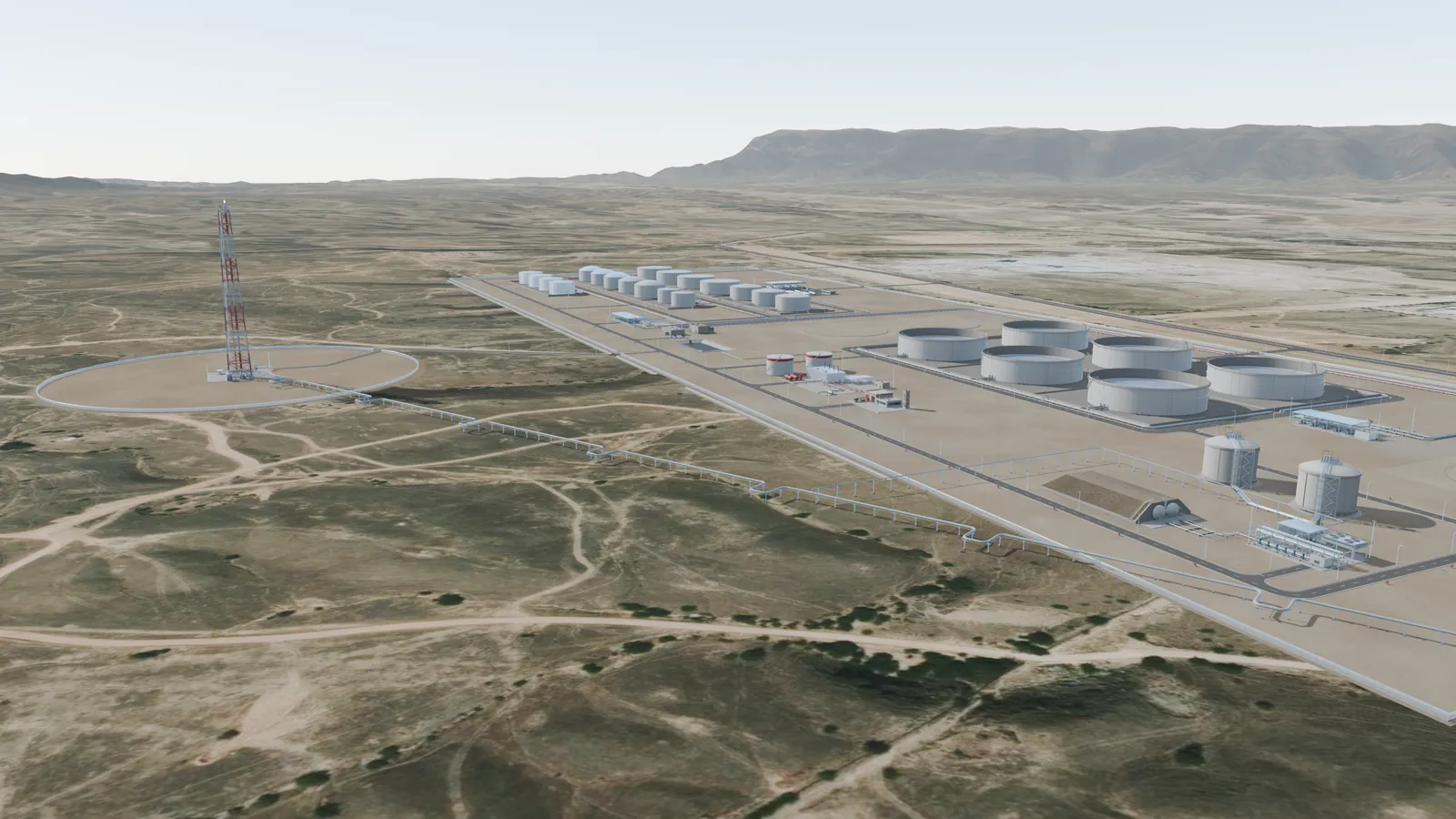
- Flare-gas recovery to minimise routine flaring; the 150 m elevated flare stands on its own site with a kept-clear zone
- Mounded LPG bullets in place of spheres
- Fired equipment on the south side of the process core, and occupied buildings cross-wind to the east
- Drainage and bunds sized for Mekunu-class rainfall of 278 mm in 24 hours
Water and power
Self-supplied, with no draw on Dhofar’s water
- 01
Seawater desalination
A 25,000 m³/d reverse-osmosis plant meets the refinery’s demand of about 22,000 m³/d. The project uses no groundwater and does not draw on the public water network.
- 02
Intake and outfall
A separate seawater intake at about 15 m depth, outside the mooring’s spill-drift path, and a brine diffuser at about 20 m depth.
- 03
Captive power
Gas-fired cogeneration of about 165 MW makes power and process steam together, connected to the grid by two 132 kV circuits.
- 04
Reliability
One gas turbine with grid import carries the plant’s essential load, and surplus power is offered to the grid only when it is available.
Climate
Emissions in context
- 2.87 Mt CO₂/yrDirect emissions at stabilised phase-1 operation
- 2.2%Share of Oman’s 2024 inventory of 132.3 Mt CO₂e
- 20–50 USD/tCarbon price range tested in the economics
Emissions comprise the refinery (2.27 Mt) and cogeneration (0.6 Mt). Abatement options studied include a capture-ready hydrogen plant design, flare-gas recovery, energy efficiency and electric drives, and renewable power from Dhofar’s solar and wind resources.
Resilience
Designed for Dhofar’s climate
Cyclone Mekunu made landfall at Raysut in 2018. The design basis allows for Mekunu-class rainfall (278 mm in 24 hours and 617 mm in one event), cyclone surge and a sea-level allowance of 0.3–1.0 m to 2100, with flood protection inside the site-infrastructure budget.
Marine works are scheduled for December to April, outside the Khareef swell of June to September and the cyclone windows of May–June and October–November.
Community
Coexistence with Raysut and the Khareef season
Salalah is Oman’s main Khareef destination, and the refinery sits in an industrial zone close to Raysut’s housing. The ESIA models air quality across the monsoon season, and construction logistics are planned around it.
Part of the parcel is home to an existing community, so the project includes a resettlement programme to IFC Performance Standard 5: negotiated, led by the authorities and funded by the project, with a census and cut-off date, consultation, a disclosed resettlement action plan, replacement housing and a grievance mechanism. Its milestones are gates for engineering and the investment decision.
In-country value
Jobs, skills and Omani supply
Phase 1 would create about 835 direct operating posts, with about 400 steady-state contractors and a construction workforce that peaks at about 12,000.
The Omanisation target rises from 60% at commercial operation to 70% two years later and 80% by year five. About 300–400 Omani trainees would be recruited three years before start-up for 18-month programmes, and procurement would follow the national in-country value framework.