

Site and logistics
A coastal site with deep water and the port next door
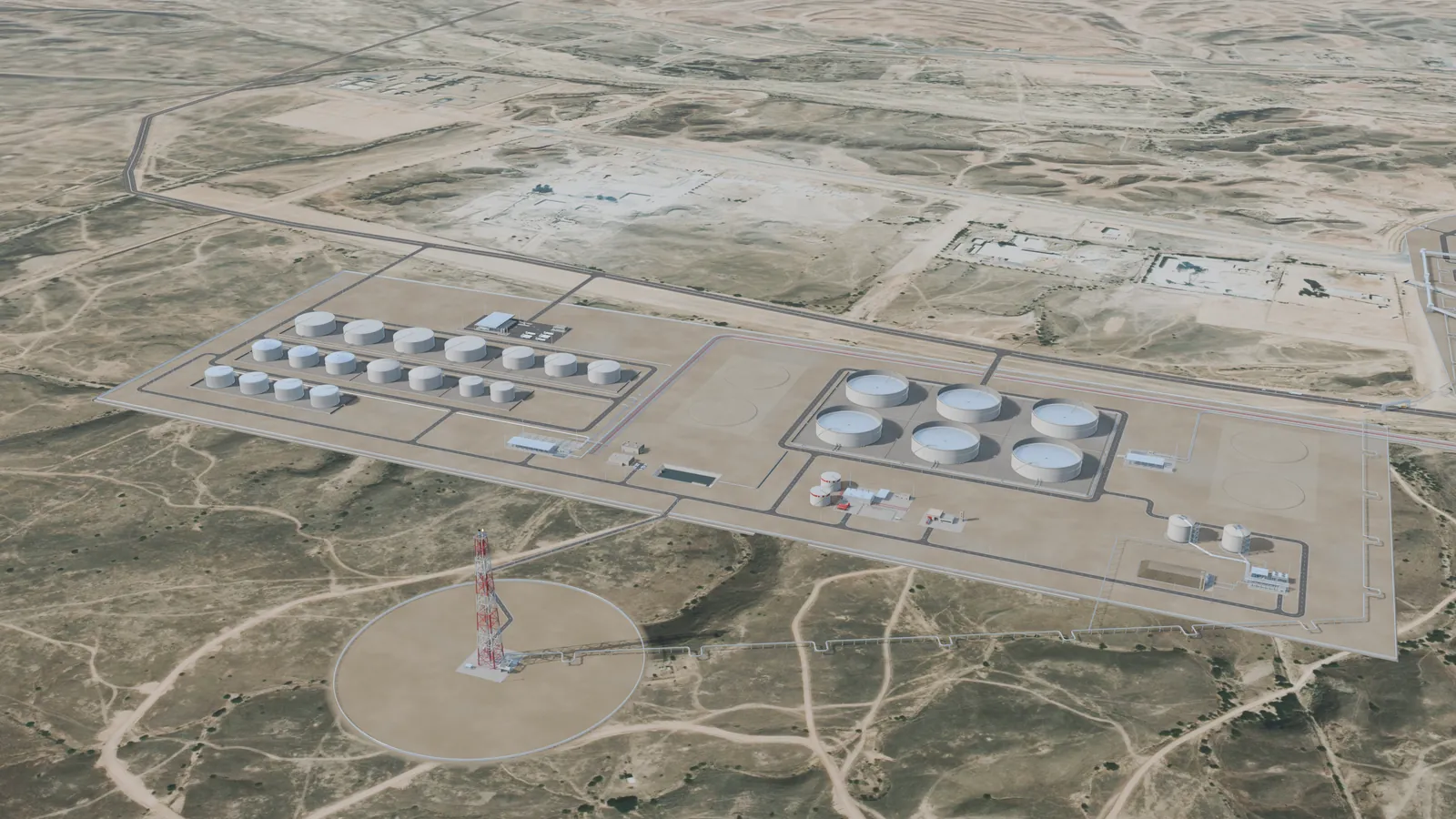
The process core sits on a 125 ha parcel on the Raysut plateau in the Salalah Free Zone. Storage, the flare and the marine links occupy adjacent land; crude arrives by single-point mooring and products leave through the Port of Salalah.
Location
Salalah Free Zone, Raysut, Dhofar
The parcel lies on the Raysut limestone plateau, 20–53 m above sea level, inside an operating industrial cluster on the western side of Salalah.
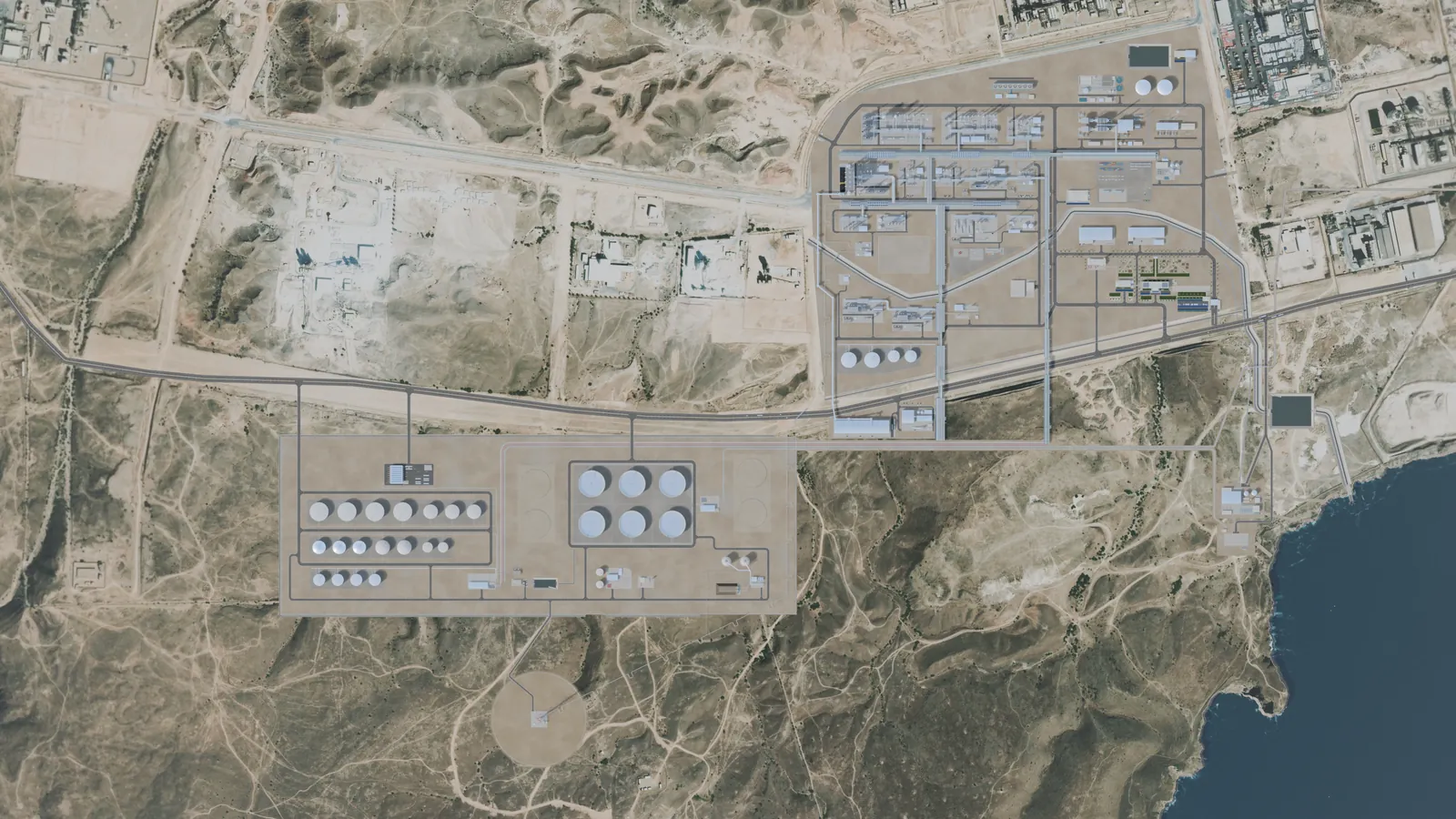
The Port of Salalah liquid berths are 4.3–4.6 km to the east-north-east, the free-zone 132 kV grid station is about 0.6 km away and the cliff coast is 1.7 km to the south. Deep water lies close inshore.
The design allows for Mekunu-class rainfall, cyclone surge and the Khareef monsoon swell of June to September, which limits marine works to December–April.
Site plan
The phase-1 layout
Plot plan Rev 1 places the process core, utilities and buildings on the parcel, and the tank farm, flare and marine links on adjacent land.
Land
Phase-1 land requirement
Crude import
Single-point mooring for Suezmax and VLCC tankers
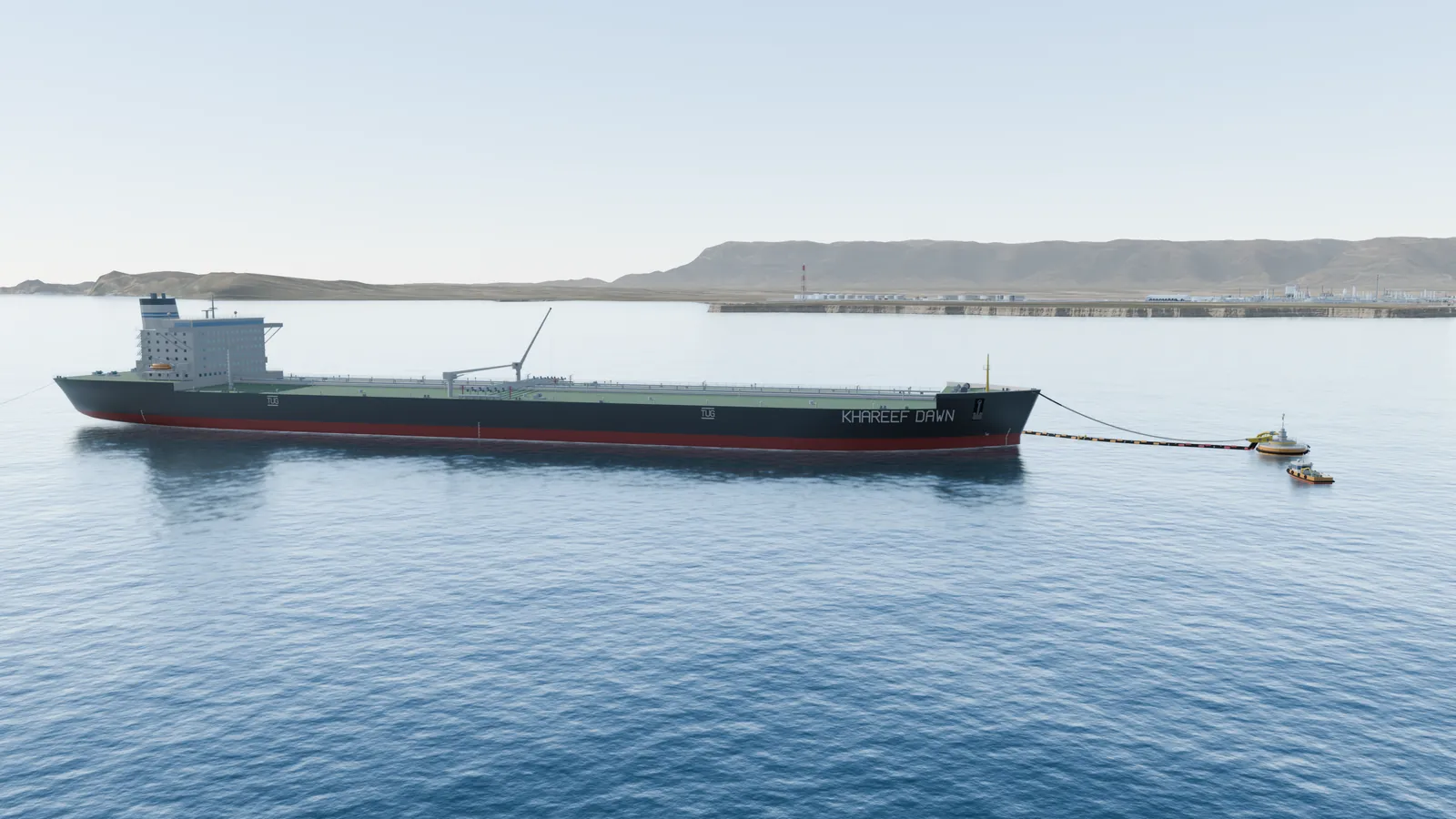
A single CALM buoy in 38–39 m of water, about 2.55 km off the coast south-south-east of the parcel, receives crude from Suezmax and VLCC tankers.
Two 42-inch lines, sized for 300,000 bpsd from the start, run 2.71 km subsea, cross the shore by a 0.59 km horizontal directional drill and continue about 2.1 km onshore to the crude tanks, through a landfall valve station set back from the cliff.
A 500 m safety zone, a one-nautical-mile area to be avoided and a no-anchoring corridor protect the buoy and its lines. Twenty-five days of owned crude in the tank farm bridge the Khareef season, when swell reduces mooring availability.
From mooring to market
How crude and products move
Crude in
- Single-point mooring38–39 m of water, about 2.55 km offshore
- Subsea lines2 × 42-inch, 2.71 km to the shore crossing
- Shore crossing0.59 km horizontal directional drill
- Landfall valve stationThen about 2.1 km of onshore lines
- Crude tanksSix tanks on the storage lease, 4.4 mn bbl
Products out
- RefineryProcess core on the 125 ha parcel
- Product and LPG tanksOn the storage lease, about 16 days of finished products
- Export pipelinesAbout 7.5 km along the free-zone pipe-rack corridor
- Port of SalalahLiquid berths 1–2 and a third berth to be secured
- Product tankersAbout 150 cargoes a year to market
About 5.8 million tonnes a year of liquid products: about 5.6 Mt over the port’s liquid berths and about 0.2 Mt of LPG through an existing LPG jetty, subject to its owner’s consent.
Product export
Through the Port of Salalah
Phase 1 has no dedicated product jetty. All liquid products leave through the Port of Salalah under a throughput agreement.
- 01
Liquid berths 1–2
Two 300 m berths with an 18 m draft, which handled 3.43 Mt of liquid bulk in 2025 against a nominal 6 Mt a year.
- 02
A third liquid berth
Headroom on berths 1–2 at start-up is only about 1.3 Mt a year, so a third liquid berth, which the throughput agreement must secure and which must be in service by early 2034, is a condition of the investment decision.
- 03
Fallback
If the third berth or the throughput agreement cannot be secured, the fallback is a sheltered product jetty with a breakwater.
Storage
8.4 million barrels of operating tankage
28 tanks for crude, finished products, intermediates and 0.5 mn bbl of bunker and merchant storage, plus separate refrigerated and mounded LPG storage.
- 01
Crude
4.4 mn bbl in six floating-roof tanks, each in its own bund cell: about 25 days of usable crude.
- 02
Finished products
2.7 mn bbl for diesel, jet fuel, gasoline and naphtha: about 16 days of finished products.
- 03
Intermediates
0.8 mn bbl, including hot VGO and residue tanks on the parcel that buffer unit outages.
- 04
LPG
Two 12,300 m³ refrigerated full-containment tanks and two 2,570 m³ mounded bullets, which replace spheres and remove the risk of a fire escalating to the crude tanks.