

The project
One train, one site, a clear path to scale
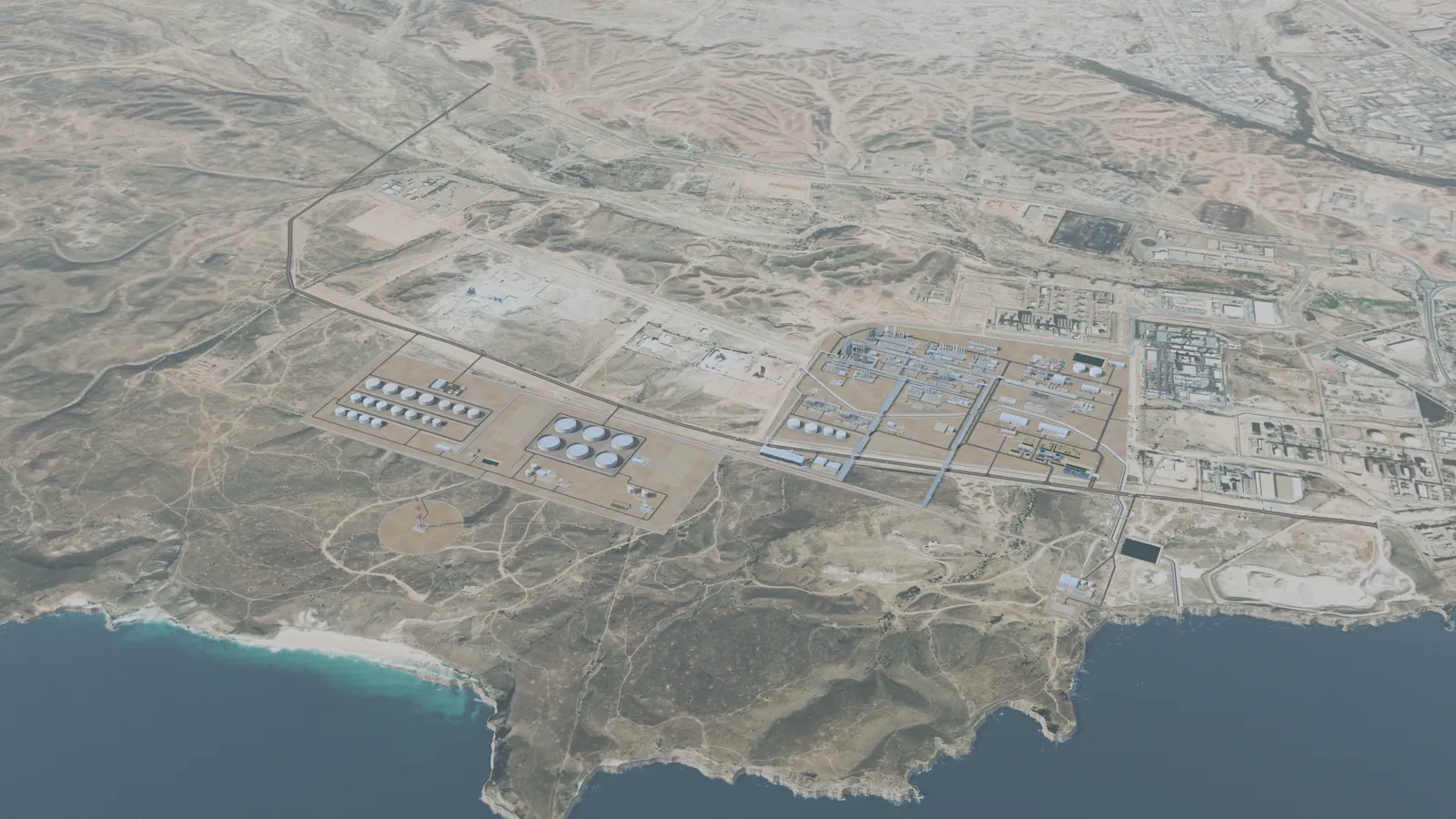
The Salalah Refinery Project (SRP) is the proposed development of a 150,000 bpsd conversion refinery and its associated facilities in the Salalah Free Zone, Dhofar Governorate, with studied options to 300,000 bpsd.
Proposition
Turning regional crude into the fuels the Indian Ocean imports
Phase 1 is a single full-conversion train, designed for maximum middle distillates and no fuel oil, on Oman’s Arabian Sea coast.
The refinery would run crude bought from regional producers with spare capacity and loaded outside the Strait of Hormuz, alongside an allocation of Oman Export Blend at the official selling price. It would sell 10 ppm diesel, Jet A-1, gasoline, naphtha and LPG into import markets in East Africa, South Asia, Oman and the Red Sea, and balance the rest through Asian and European hubs.
Phase 1 is sized as the financing base case. Land, crude lines, the tank-farm layout and utility connections are prepared so that a replica second train can follow later, if market, crude, gas and phase-1 performance evidence support it.
Scope
What phase 1 includes
Everything the refinery needs to receive crude, process it and deliver products is part of the phase-1 scope.
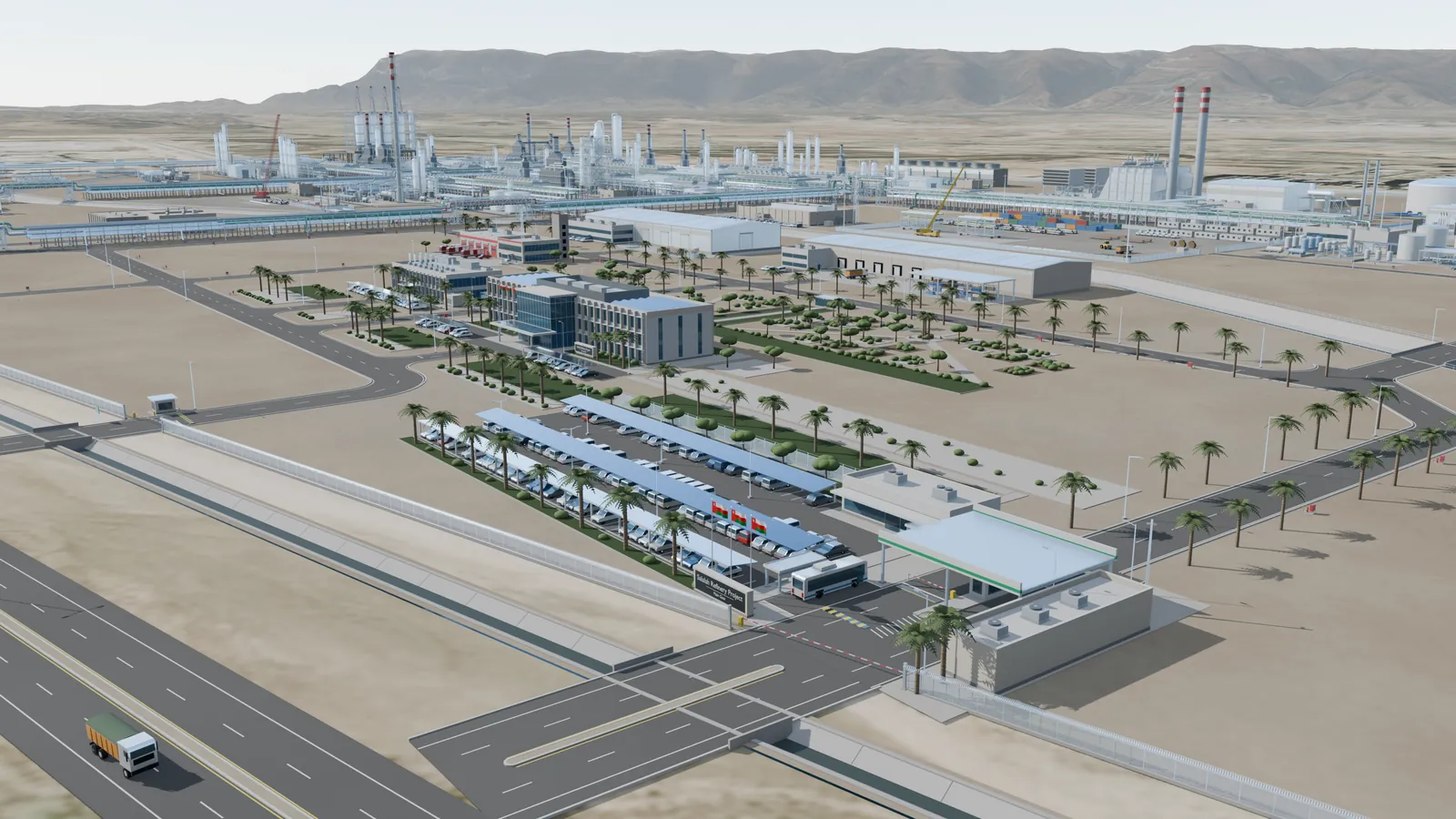
- A 150,000 bpsd crude and vacuum distillation train with full conversion, treating, hydrogen production and sulphur recovery
- 8.4 million barrels of operating tankage on an adjacent storage lease
- Crude import through a single-point mooring for Suezmax and VLCC tankers
- Product export by pipeline to the Port of Salalah liquid berths
- Captive cogeneration of about 165 MW and a 25,000 m³/d seawater desalination plant
- Administration, laboratory, fire station, workshops and a training centre
Why Salalah
Deep water, a port and an industrial zone in one place
- 01
Outside the Strait of Hormuz
Crude and products move on the Arabian Sea, which adds route diversity for producers that already load outside the strait. The site is not immune to regional disruption, so the design provides for stand-off distances, segregation and hardened control and power systems.
- 02
Deep water close inshore
Water reaches 38–39 m about 2.55 km off the coast, deep enough for a VLCC single-point mooring on a short subsea line.
- 03
An operating industrial zone
The parcel lies in the Salalah Free Zone at Raysut, about 0.6 km from the free-zone grid station, within reach of the southern gas network and 4.3–4.6 km from the Port of Salalah liquid berths.
- 04
Close to import markets
East Africa and South Asia import diesel, jet fuel and gasoline in volume, and Salalah is about four to five sailing days from both.
Capacity path
Phase 1 and the options to 300,000 bpsd
The study compared four ways to reach 300,000 bpsd. It recommends one train now, with one gated expansion path.
- 01
Phase 1: one train (option A)
150,000 bpsd in one train: the financing base case. It carries about USD 0.2 bn of expansion pre-investment inside the phase-1 estimate.
- 02
Second train (option B)
A replica 150,000 bpsd train on reserved land, estimated at USD 7.3 bn (P50), about USD 48,700 per added bpsd. It goes ahead only if a decision gate, no earlier than the fourth quarter of 2036, confirms offtake, crude, gas, land and phase-1 performance.
- 03
Debottleneck
Hydraulic design margin for a 10–15% debottleneck to 165,000–170,000 bpsd in 2036–38, carried as an upside outside the base economics.
- 04
Options set aside
Two 75,000 bpsd steps would cost about USD 1.5 bn more than a replica train for the same capacity and are retired. Two trains from the outset are not recommended: crude and offtake for 300,000 bpsd cannot be evidenced at a 2029 decision.
Expansion is gated on market evidence, phase-1 performance, crude and gas; no date for a second train is committed.
Timeline
Indicative development timeline
Target dates from the project basis. Funded development starts once the land and licence instruments are confirmed, and each later date depends on the steps before it.
- Q1 2027
Funded development starts
Owner’s team, surveys, licensor and market studies, and the start of the environmental and social baseline.
- Q4 2027
Concept freeze
Licensor and LP study, a Class 4 cost estimate, and the commercial anchors tested with prospective partners.
- Q1 2028 – Q1 2029
FEED, ESIA, permits and agreements
Front-end engineering design, the integrated ESIA and permits, and the gas, crude, port and offtake agreements.
- Q2 2029
Final investment decision
Taken once the nine conditions precedent are met, from the gas allocation and permits to port access and land.
- Q4 2029
Financial close and EPC award
Financial close and award of the engineering, procurement and construction contracts.
- Q4 2033
Marine and tankage ready
Single-point mooring, shore crossing, landfall station and tank farm ready to receive crude.
- Q2 2034
Commercial operation
Mechanical completion in the first quarter and commercial operation in the second; stabilised operation from 2036.
- Q4 2036
Expansion decision gate
Earliest review of a second train, after at least two years of phase-1 operation.
Status
Where the project stands
The phase-1 feasibility package was completed in October 2026. It comprises a feasibility study, a market study, an environmental and social scoping study, a phase-1 plot plan (Rev 1), a 3D model of the refinery, a screening financial model and an investor-readiness checklist, all built on one project basis.
Capacities are targets, and costs, yields and schedules are screening estimates, to be replaced by engineering and commercial evidence as development proceeds.